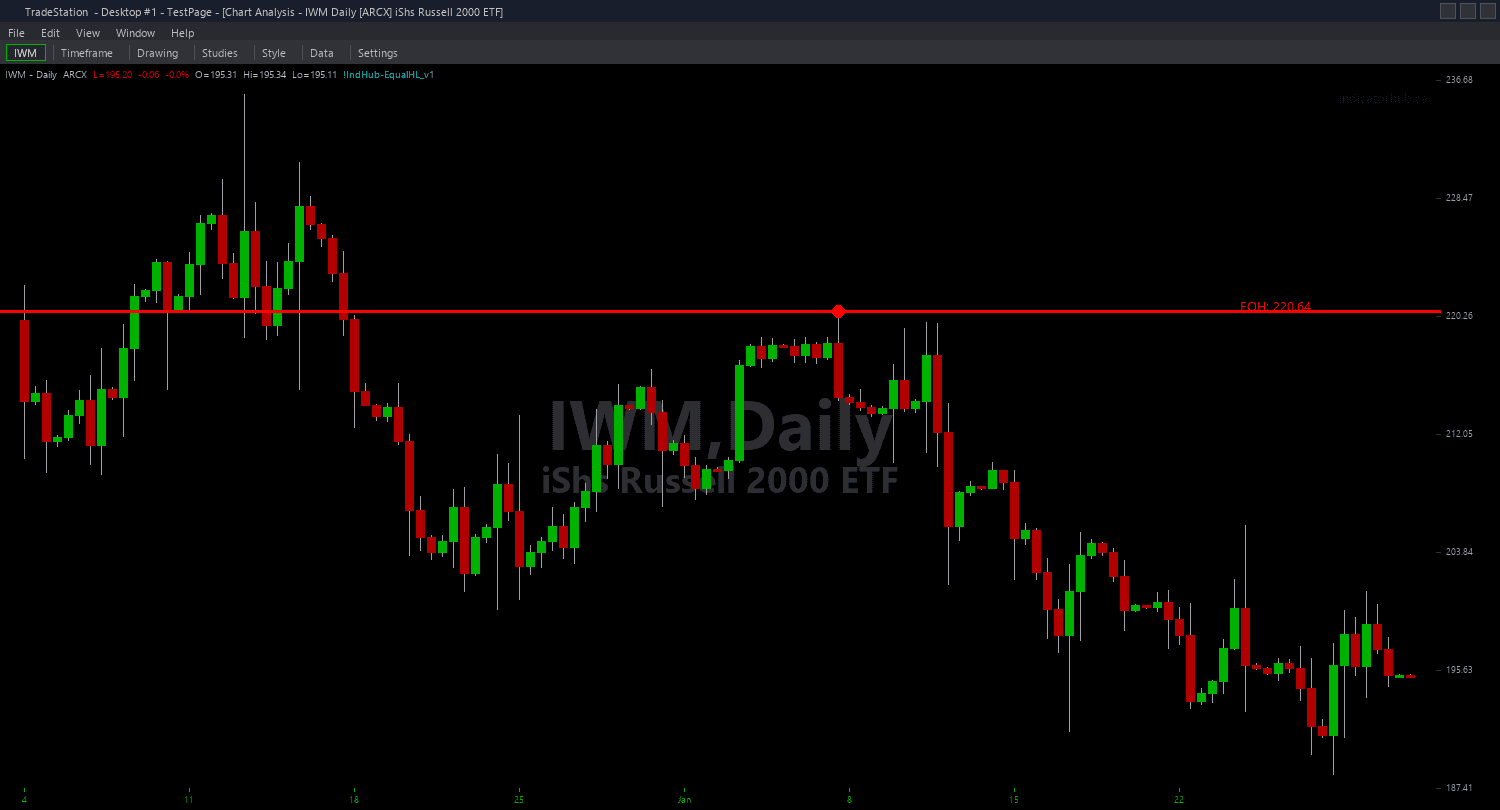
Equal Highs & Lows PaintBar
Equal Highs & Lows PaintBar adds an unmissable visual layer to your chart by coloring the price bar when a sweep event occurs at an equal level. Amber bars signal an EQH sweep — price closed above an Equal Highs level, taking the sell stops. Cyan bars signal an EQL sweep — price closed below an Equal Lows level, taking the buy stops. Non-sweep bars retain their normal candlestick colors.
- ●Amber-colored bars mark EQH sweep events — institutional stop-hunt above equal highs, potential reversal point for short entries
- ●Cyan-colored bars mark EQL sweep events — institutional stop-hunt below equal lows, potential reversal point for long entries
- ●EQHSweepColor and EQLSweepColor inputs let you customize the highlight colors to match your chart theme
- ●Optional AlertOnSweep fires an audio alert on the bar when a sweep occurs
- ●The PaintBar only colors the actual sweep bar — not every bar beyond the level — keeping the signal precise and clean
- ●If both an EQH and EQL sweep occur on the same bar (extremely rare), the EQH sweep takes priority
The PaintBar is the fastest way to spot sweep events on a busy chart. When you see an amber or cyan bar, you know a liquidity pool was just taken without needing to check any levels or data. This makes it especially valuable during fast session opens when multiple sweeps can occur rapidly.
All signals are guaranteed non-repainting. Once a bar is colored on close, the color will never change.
30-Day Money-Back Guarantee
Try it risk-free. Not satisfied? Full refund, no questions asked.
Part of the Equal Highs & Lows Bundle
Get all 4 study types for $65 — save $30
Who This Is For
Equal Highs & Lows PaintBar is designed as a visual confirmation layer for sweep events. Use it when you need instant awareness of liquidity takes, especially during the volatile session opens when sweeps are most common.
Apply it to the same chart as the Equal Highs & Lows chart indicator. The horizontal lines show you where equal levels are, and the painted bars show you the exact bar when those levels get swept. Add the ShowMe study for formation dots that track when new levels form.
Particularly effective on 5-minute to 15-minute charts during London open (3:00-4:00 AM ET) and New York open (9:30-10:30 AM ET) when institutional sweep activity peaks. The color contrast between amber/cyan sweep bars and normal candlestick colors makes sweep events visible even when monitoring multiple charts.
See It in Action
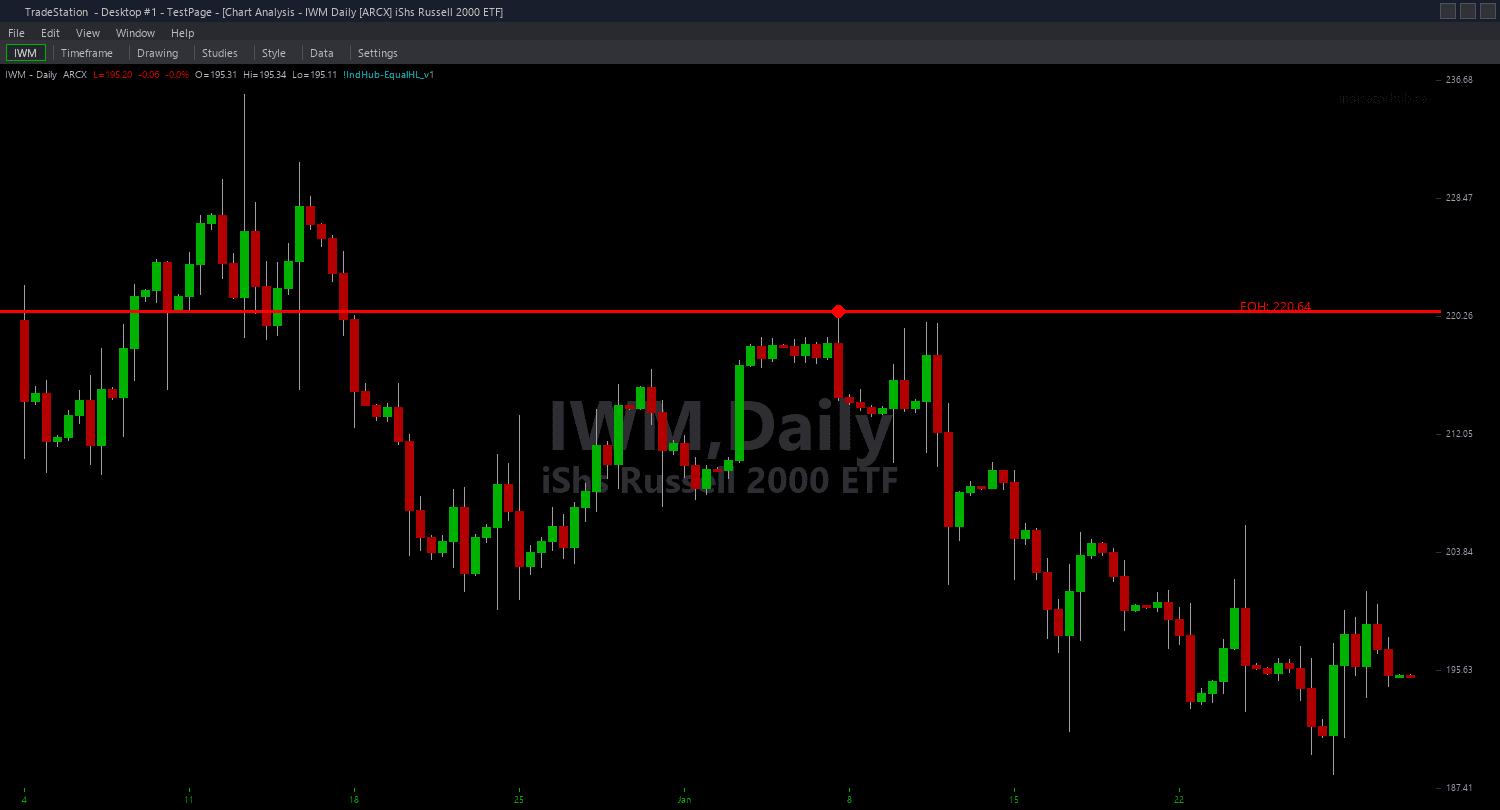
Example chart showing Equal Highs & Lows PaintBar on a live trading session
Installation Guide
Step 1: Download the indicator file
After purchasing, you will receive a download link via email. Click the link and save the equal-highs-lows-paintbar.eld file to your computer. Save it somewhere easy to find like your Desktop or Downloads folder.
Step 2: Open the Import Wizard
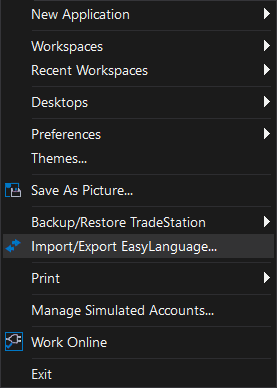
Open TradeStation. Click the File menu in the top-left corner, then select Import/Export EasyLanguage to launch the Import/Export Wizard.
Step 3: Select the import type
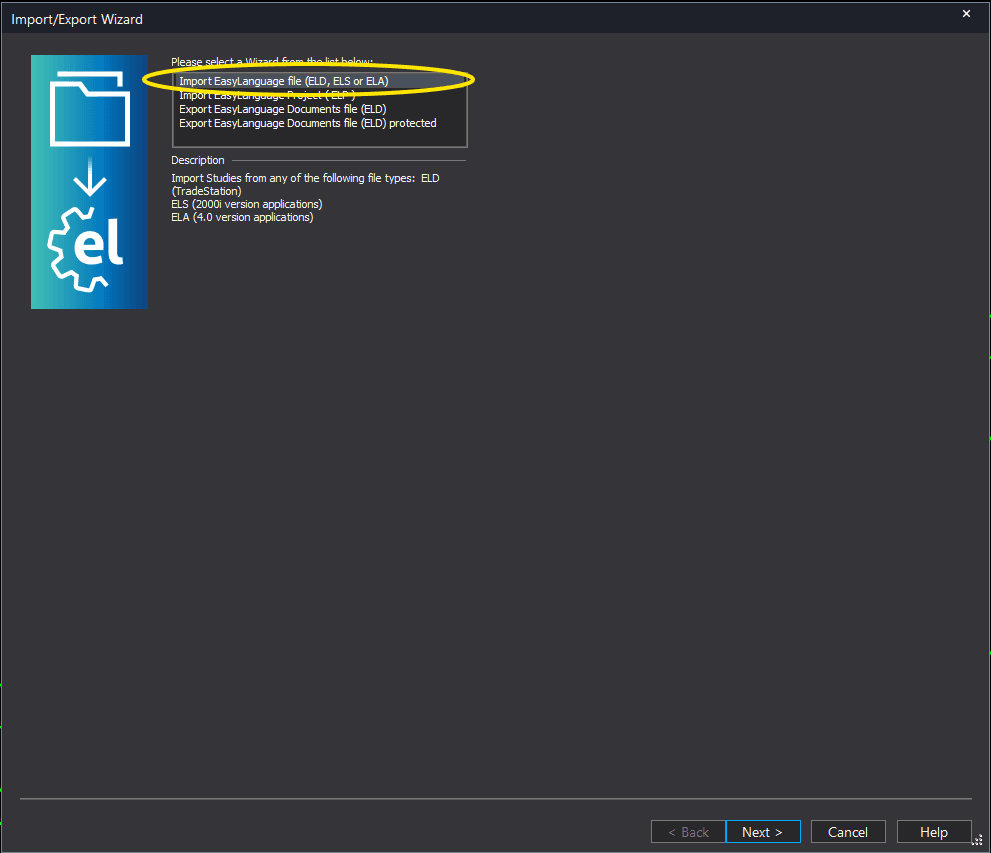
In the Import/Export Wizard, select "Import EasyLanguage file (ELD, ELS or ELA)" from the list. Click Next to continue.
Step 4: Browse for the file
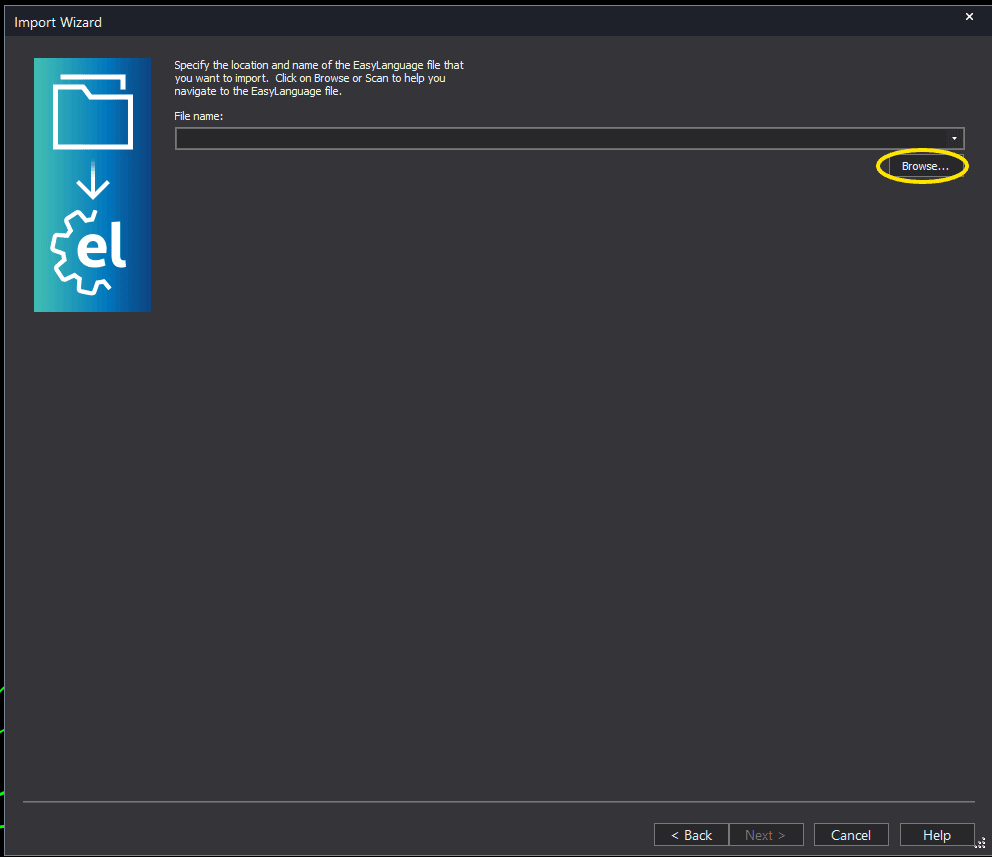
Click the Browse button to open a file browser where you can locate your downloaded .ELD file.
Step 5: Select and open the file
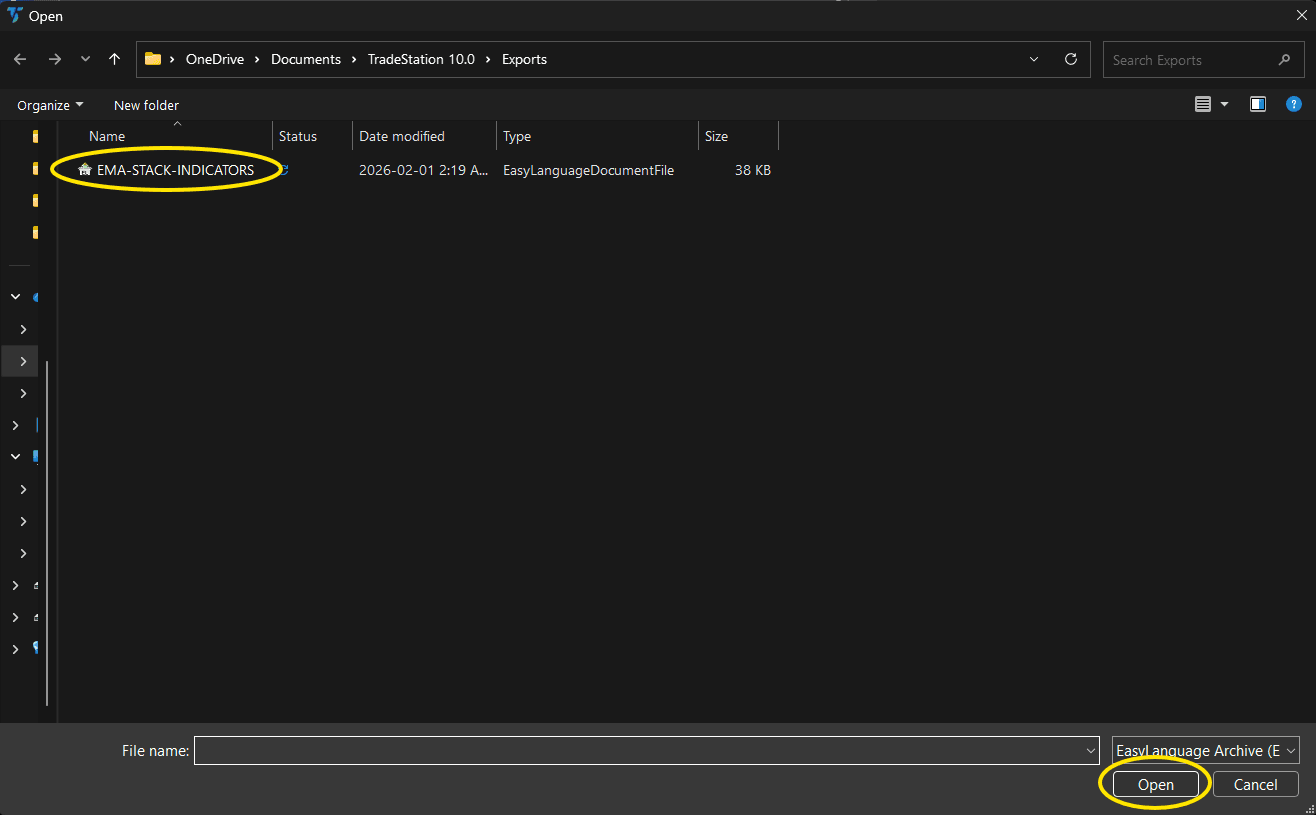
Navigate to the folder where you saved the .ELD file. Select equal-highs-lows-paintbar.eld and click Open. The file name shown may differ from the screenshot — look for your downloaded indicator file.
Step 6: Open the Studies menu
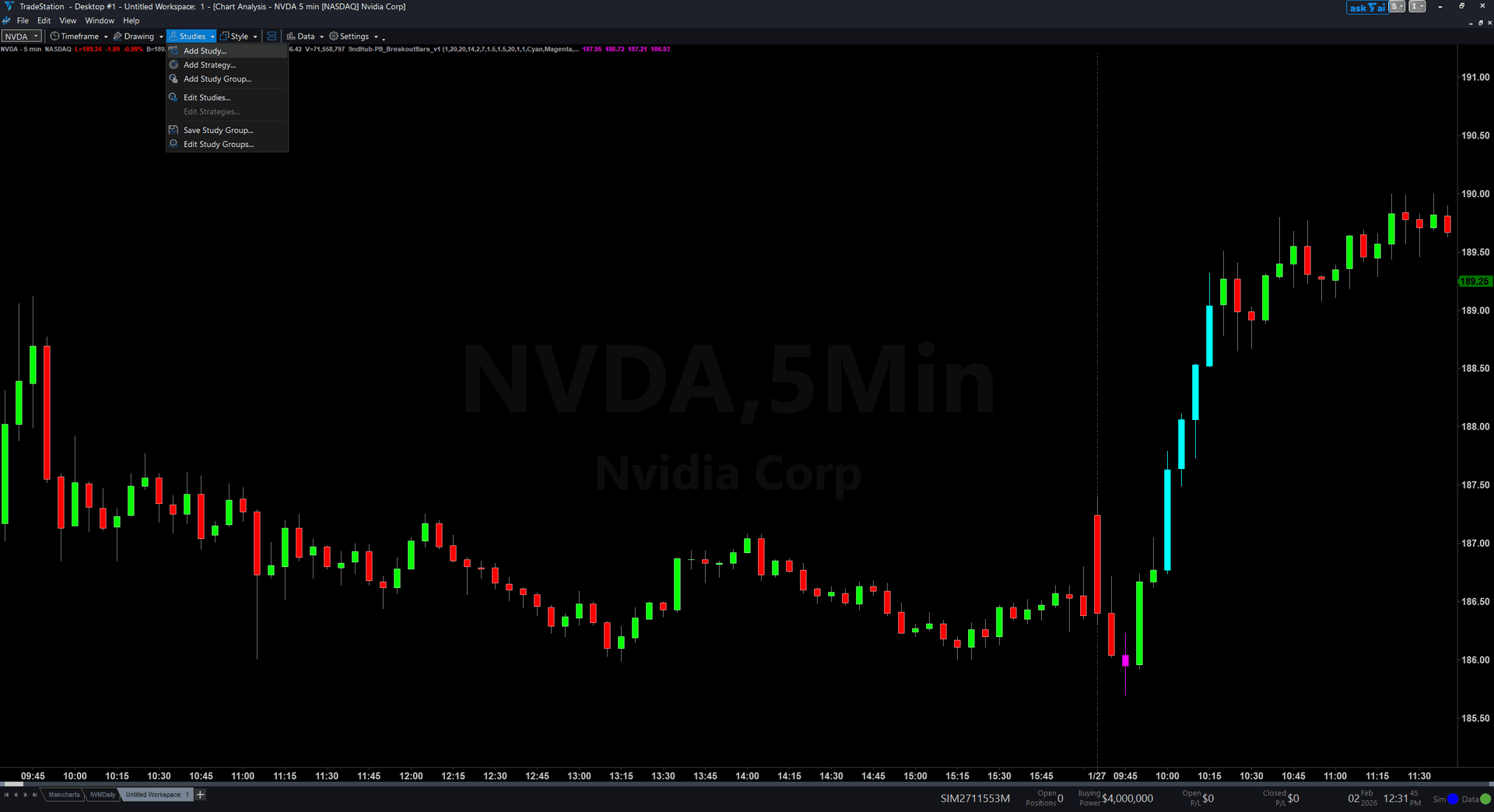
On your chart, click the Studies dropdown in the toolbar and select Add Study.
Step 7: Select the PaintBar study
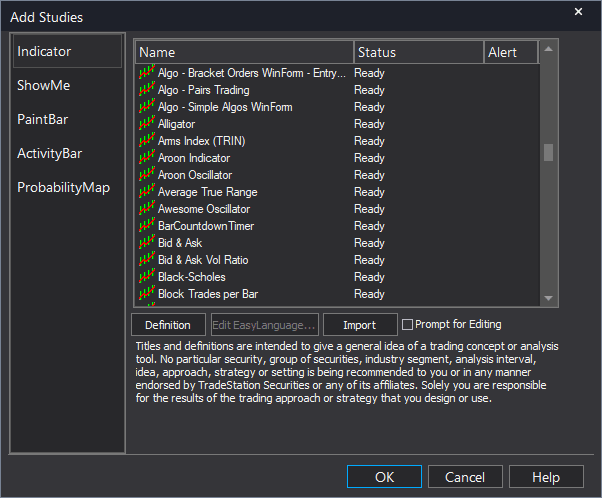
In the Add Studies dialog, click the PaintBar tab on the left side. Find "!IndHub-PB_EqualHL_v1" in the list, select it, and click OK to apply.
Step 8: Configure settings (optional)
Right-click anywhere on the chart, go to Studies > Edit Studies..., select the indicator, and click the Inputs tab. Key inputs: EQHSweepColor (default Amber) and EQLSweepColor (default Cyan) control the bar colors. Detection settings (SwingStrength, EqualTolerance, MaxLevelAge, MaxLevelCount) control which levels are tracked. AlertOnSweep toggles audio alerts.
Common Issues
I do not see any colored bars. The indicator is applied but nothing is painted.
The PaintBar only colors the specific bar when a sweep event occurs — price must close beyond an equal level. Sweep events are infrequent by nature. If no active equal levels exist near current price, or if price has not reached those levels, no bars will be painted. Check the chart indicator to see where equal levels are relative to current price.
Can I change the sweep colors?
Yes. To change colors, right-click anywhere on the chart, go to Studies > Edit Studies..., select the indicator, click the Inputs tab, and change EQHSweepColor and EQLSweepColor to any TradeStation color name or RGB values. Choose colors that contrast well with your candlestick colors. Amber and Cyan are chosen as defaults because they stand out against standard green/red candlestick colors.
A bar was colored but price did not reverse after the sweep. Is the signal wrong?
Not every sweep produces an immediate reversal. The PaintBar marks the liquidity take event — what happens next depends on broader market context. Some sweeps lead to sharp reversals (the classic stop-hunt), while others lead to continuation as genuine breakouts. Use additional confirmation: rejection wicks, volume analysis, and higher-timeframe alignment to filter sweep signals that are likely to reverse from those that will continue.
For additional help, contact support.