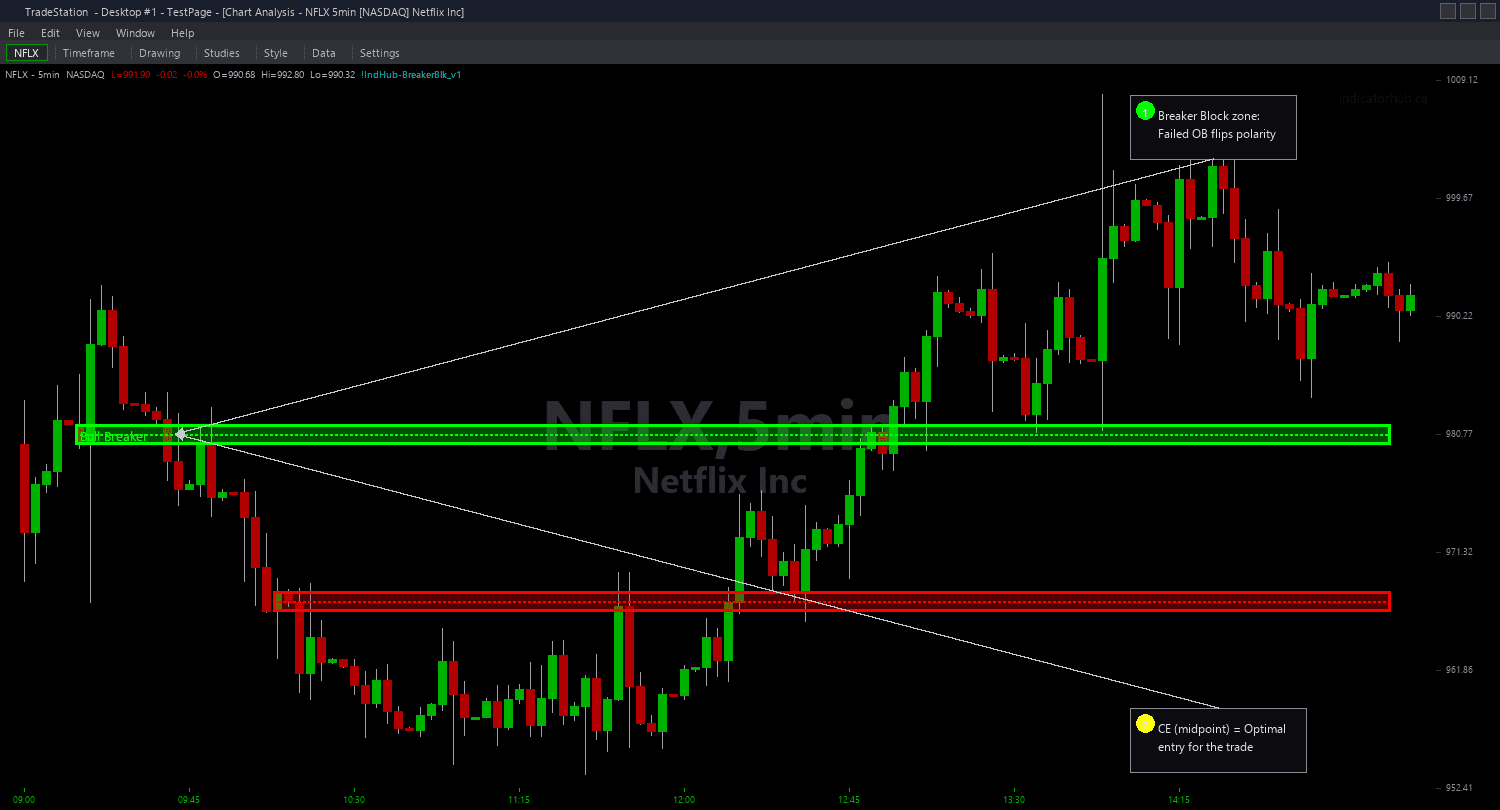
Breaker Block Chart
Breaker Block Chart identifies the complete lifecycle of a failed Order Block and draws color-coded breaker zones on your chart at the polarity flip locations. A bullish breaker (green zone) forms when a bearish Order Block fails — price breaks above the supply zone, flipping it into demand. A bearish breaker (red zone) forms when a bullish Order Block fails — price breaks below the demand zone, flipping it into supply.
- ●Green zones mark bullish breaker blocks — former bearish OBs that failed and flipped to demand, acting as support when price returns
- ●Red zones mark bearish breaker blocks — former bullish OBs that failed and flipped to supply, acting as resistance when price returns
- ●50% Consequent Encroachment (CE) midpoint line drawn inside each zone as a dotted line — the precision entry level for breaker retests
- ●SwingStrength (default 5) controls the pivot sensitivity for identifying the original swing points that lead to order block formation
- ●MaxBrkAge (default 100 bars) automatically expires breaker zones that price never returned to retest
- ●MaxBrkCount (default 10) limits simultaneous breaker zones per side to keep charts clean
- ●ShowMidpoint (default true) toggles the 50% CE line visibility — set to false for cleaner zones without the midpoint reference
- ●Automatic mitigation removes breaker zones when price closes through them in the direction that would invalidate the breaker
- ●Plot1 outputs +1 inside a bullish breaker, -1 inside a bearish breaker, and 0 outside all breaker zones for subgraph reference
The highest-probability breaker setups are first retests of fresh zones. When price returns to a bullish breaker and touches the CE midpoint for the first time, institutional demand from the polarity flip is most likely to hold. Subsequent retests weaken the zone.
All zone detection uses confirmed bar data only. Non-repainting guaranteed.
30-Day Money-Back Guarantee
Try it risk-free. Not satisfied? Full refund, no questions asked.
Part of the Breaker Block Bundle
Get all 4 study types for $65 — save $30
Who This Is For
Breaker Block Chart is built for advanced SMC and ICT-style traders who understand the concept of failed Order Blocks and polarity flips. If you already trade Order Blocks, breaker blocks give you the next level of analysis — they tell you where institutional expectations were wrong and where the market reversed those expectations, creating new directional zones.
Use it on intraday charts (1-minute to 15-minute) for day trading retest entries at polarity flip levels. The default SwingStrength of 5 works well for 5-minute charts on liquid stocks and futures. For swing trading on hourly or daily charts, increase SwingStrength to 8-10 to focus on higher-timeframe structural failures.
The indicator performs best on markets with clear trending structure and genuine institutional activity: index futures (ES, NQ, YM), NASDAQ-100 stocks, S&P 500 components, and high-volume ETFs. Breaker blocks are most meaningful on higher timeframes where order block failures represent genuine institutional position changes rather than noise.
Look for fresh breaker zones (low age in bars) that have not yet been retested. When price returns to the zone for the first time and approaches the CE midpoint, that is your highest-probability entry. Place stops beyond the opposite zone boundary. The breaker concept works best when it aligns with the higher-timeframe trend direction.
See It in Action
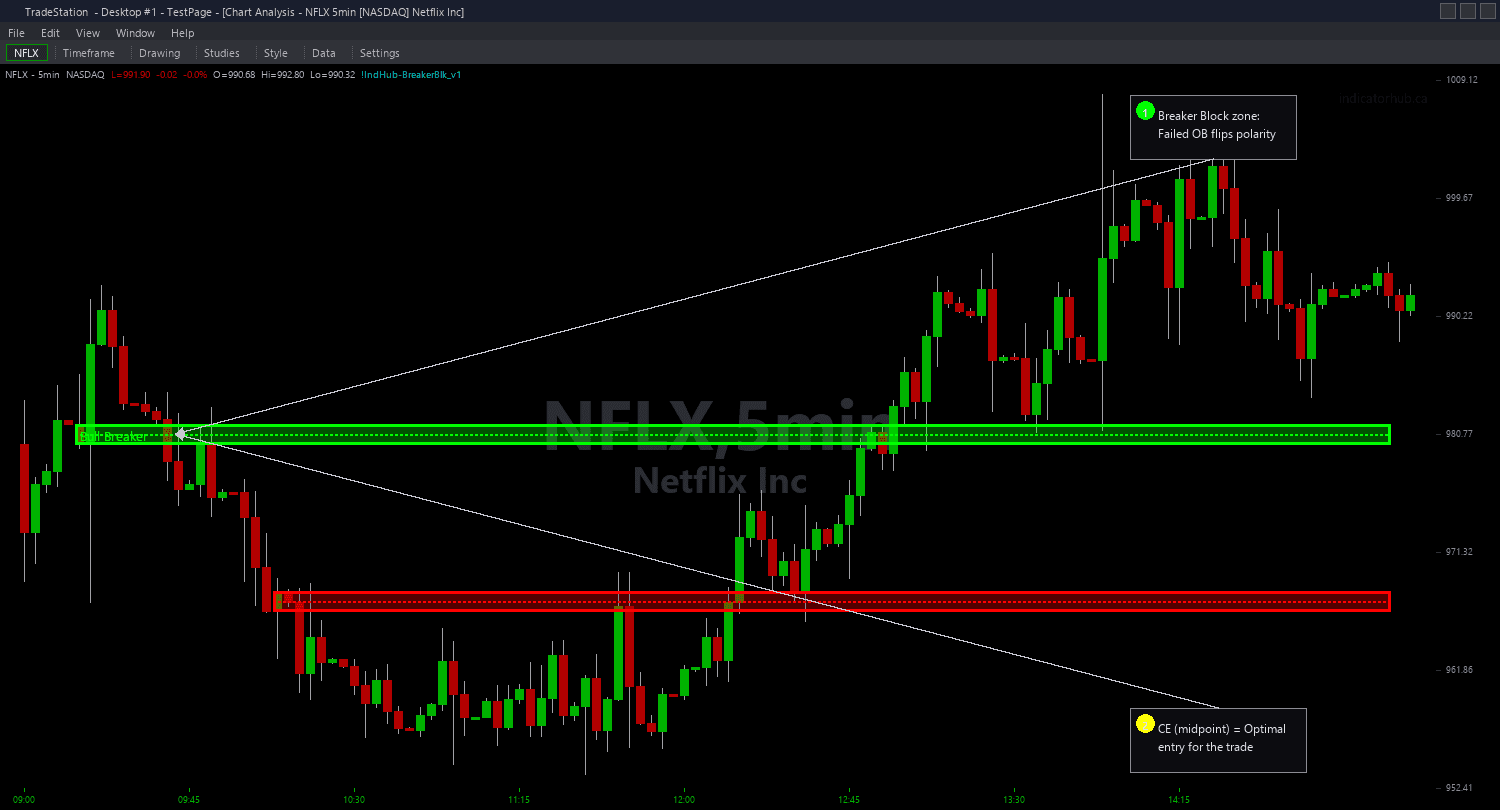
Example chart showing Breaker Block Chart on a live trading session
Example chart showing Breaker Block Chart on a live trading session
Installation Guide
Step 1: Download the indicator file
After purchasing, you will receive a download link via email. Click the link and save the breaker-block-chart.eld file to your computer. Save it somewhere easy to find like your Desktop or Downloads folder.
Step 2: Open the Import Wizard
Open TradeStation. Click the File menu in the top-left corner, then select Import/Export EasyLanguage to launch the Import/Export Wizard.
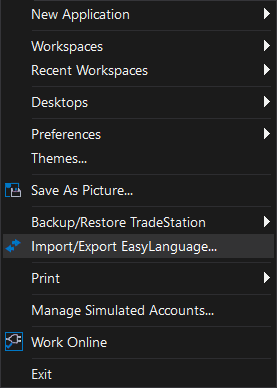
Step 3: Select the import type
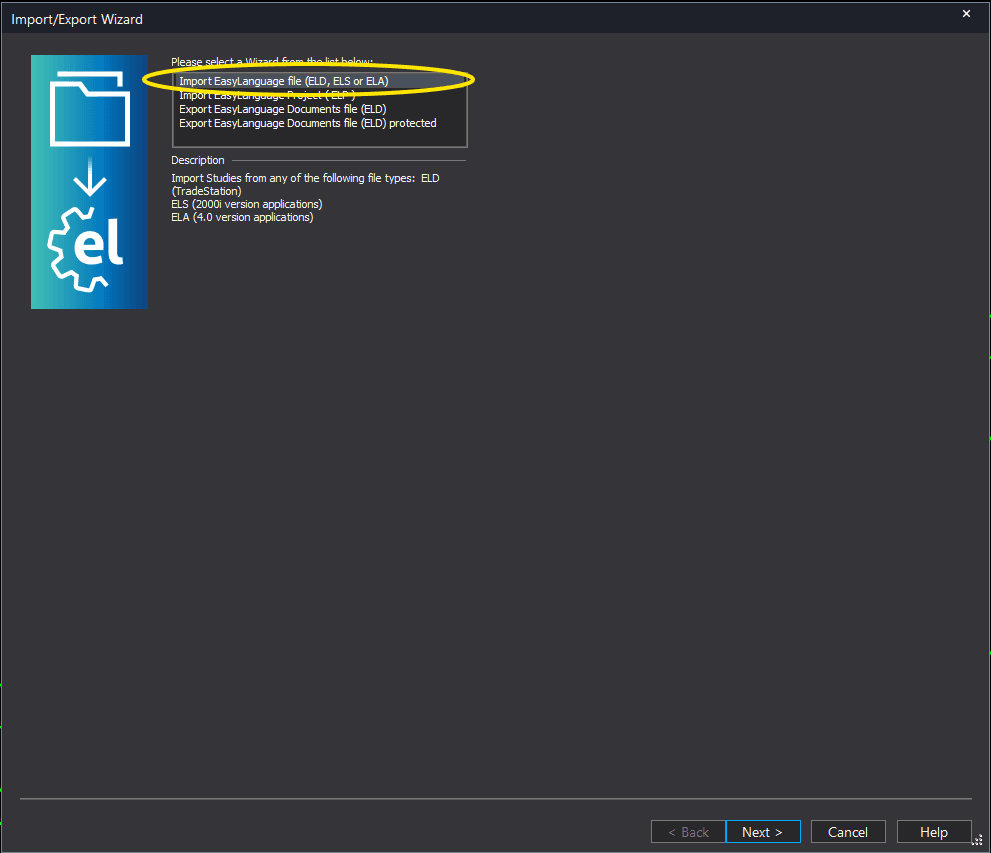
In the Import/Export Wizard, select "Import EasyLanguage file (ELD, ELS or ELA)" from the list. Click Next to continue.
Step 4: Browse for the file
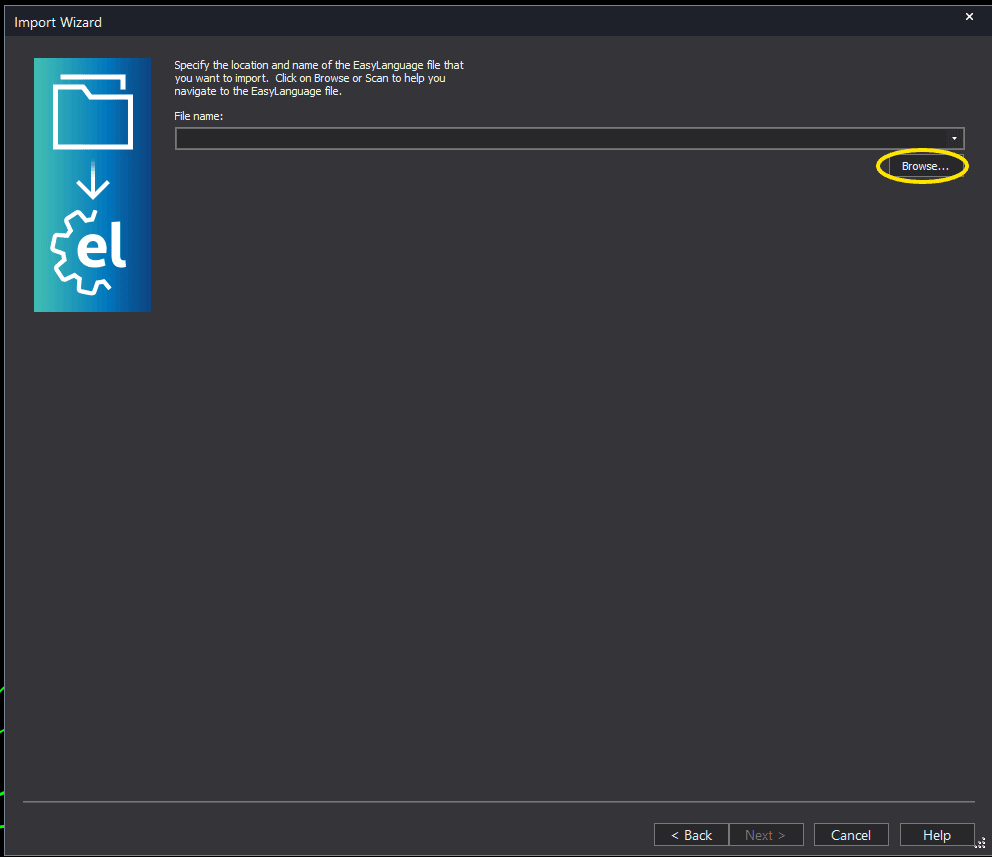
Click the Browse button to open a file browser where you can locate your downloaded .ELD file.
Step 5: Select and open the file
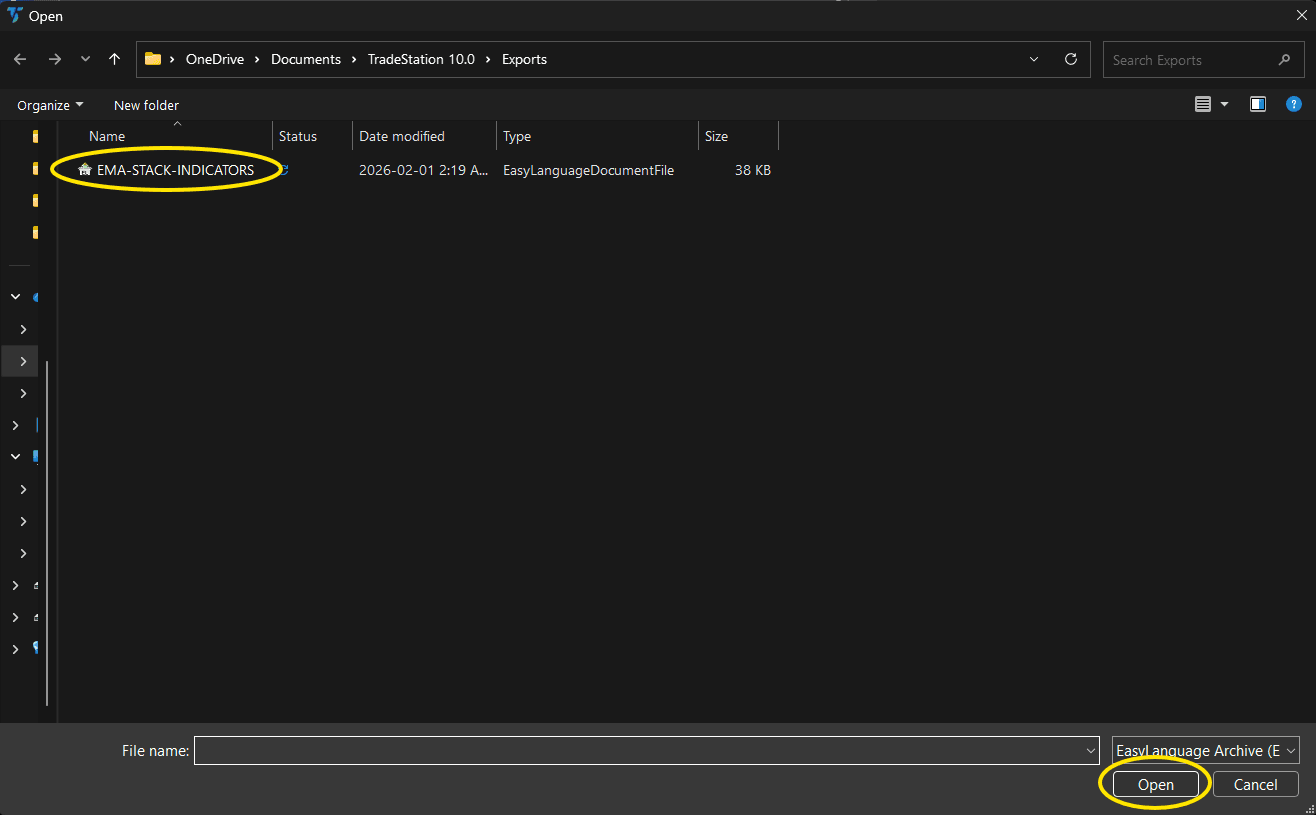
Navigate to the folder where you saved the .ELD file. Select breaker-block-chart.eld and click Open. The file name shown may differ from the screenshot — look for your downloaded indicator file.
Step 6: Open the Studies menu
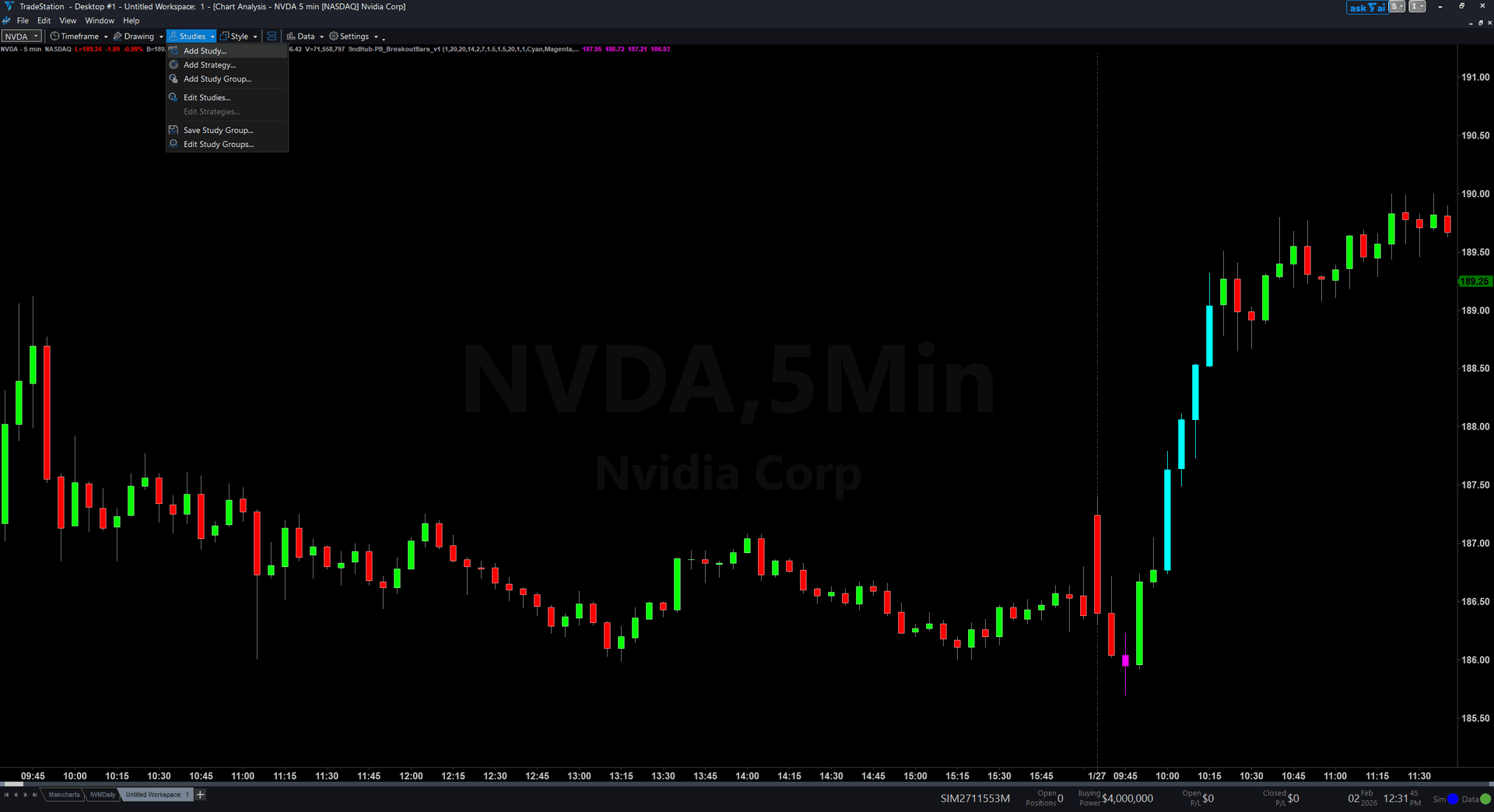
On your chart, click the Studies dropdown in the toolbar and select Add Study.
Step 7: Select the indicator
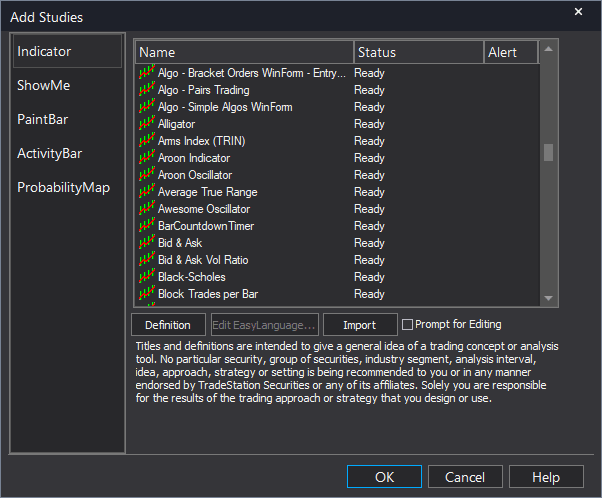
In the Add Studies dialog, make sure the Indicator tab is selected on the left side. Find "!IndHub-BreakerBlock_Chart_v1" in the list, select it, and click OK to apply.
Step 8: Configure settings (optional)
Right-click anywhere on the chart, go to Studies > Edit Studies..., select the indicator, and click the Inputs tab. Key inputs: SwingStrength (default 5, pivot sensitivity), MaxBrkAge (default 100, zone expiration in bars), MaxBrkCount (default 10, max zones per side), ShowMidpoint (default true, toggles CE line), ShowBullish/ShowBearish (toggle sides), BullColor/BearColor (zone colors). Most traders start with defaults.
Common Issues
I see very few breaker block zones compared to regular order blocks. Is the indicator working?
Yes. Breaker blocks are inherently rarer than regular order blocks because they require a full failure cycle: an OB must form, then fail, then flip polarity. Not every OB fails — many hold as expected. The rarity is what makes breaker blocks high-probability setups. If you want more signals, reduce SwingStrength to 3 to detect smaller structure points, or increase MaxBrkAge to keep zones visible longer.
What is the difference between a breaker block and a regular order block?
A regular order block is the last opposing candle before a structure break — it represents where institutions entered before a move. A breaker block is a regular order block that FAILED — price broke through the zone, invalidating the original institutional thesis. The failure transforms the zone's polarity: former support becomes resistance, former resistance becomes support. Breakers represent where institutional expectations were proven wrong, creating new directional bias.
Zones disappear from my chart. Is the indicator repainting?
No, the indicator does not repaint. Zones are removed for two reasons: mitigation (price closed through the zone, invalidating the breaker) or expiration (the zone exceeded MaxBrkAge bars without being retested). Both are expected behavior. If you want zones to persist longer, increase MaxBrkAge.
Can I see both regular order blocks and breaker blocks on the same chart?
Yes. Apply the Order Blocks Bundle chart indicator and the Breaker Block chart indicator to the same chart. They use independent detection engines. Regular OB zones will show institutional accumulation points, and breaker zones will show where those OBs failed. This gives you the complete SMC zone picture.
For additional help, contact support.