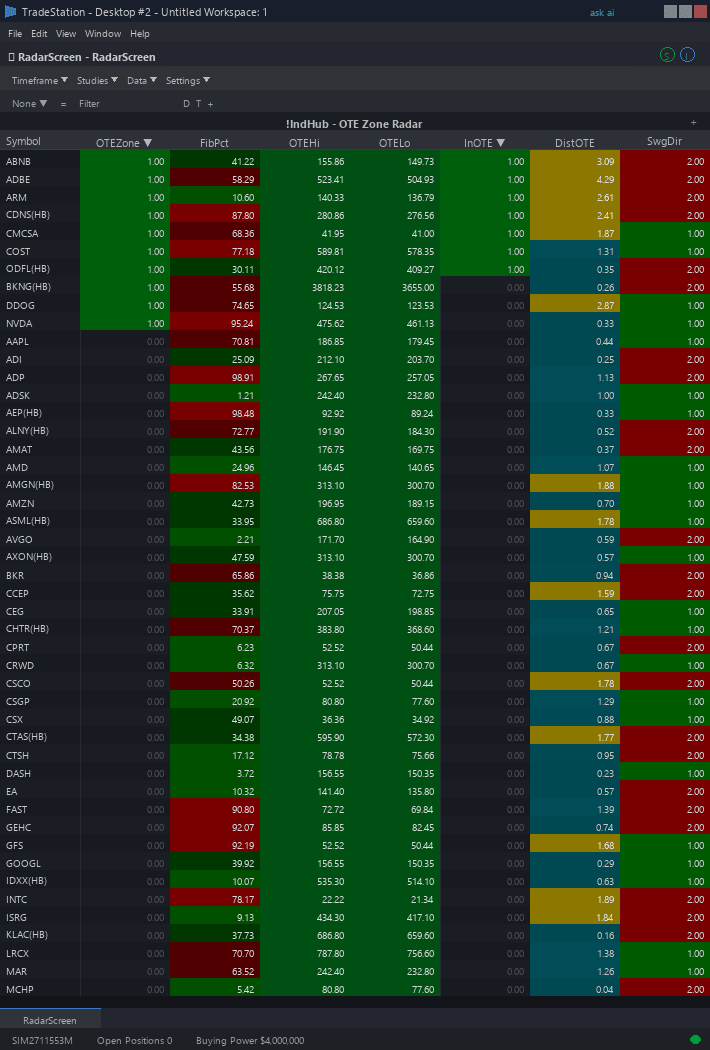
OTE Zone RadarScreen
OTE Zone RadarScreen brings Optimal Trade Entry detection to your watchlist scanning workflow. Color-coded columns show which symbols have active OTE zones, whether price is currently inside a zone, how far price is from the nearest zone, and how many active zones exist — all across your entire watchlist simultaneously.
- ●InBullOTE and InBearOTE columns light up with strong green or red backgrounds when price is currently inside an OTE zone — these are your active entry setups
- ●NrBullDst and NrBearDst columns show percentage distance to the nearest bullish or bearish OTE zone — sort ascending to find symbols approaching retracement entry zones
- ●BullCount and BearCount columns show how many active OTE zones exist per side — more zones indicate a market with frequent structural breaks and retracement opportunities
- ●CEDist column shows the percentage distance to the nearest CE midpoint (70.5% level) — the precision entry level within the OTE zone
- ●NewOTE column flashes amber when a fresh OTE zone was just created from a new structure break — sort by this to catch new setups as they form
- ●All cells use the Indicator Hub dark theme palette with green for bullish, red for bearish, teal for proximity, and amber for new zone signals
Sort by InBullOTE or InBearOTE to find symbols currently inside OTE zones. Sort by NrBullDst ascending to find symbols approaching bullish retracement zones. Sort by NewOTE to catch fresh zones the moment they form.
All signals use completed bar data only. Non-repainting guaranteed.
30-Day Money-Back Guarantee
Try it risk-free. Not satisfied? Full refund, no questions asked.
Part of the OTE Zone Bundle
Get all 4 study types for $65 — save $30
Who This Is For
Built for ICT day traders and swing traders managing 20-80 symbol watchlists who trade OTE pullback entries after market structure breaks. Use this to monitor your entire universe for OTE zone proximity and active entry setups without manually checking charts.
Add the scanner to your main RadarScreen window. During market hours, sort by InBullOTE descending to find symbols where price is currently inside a bullish OTE zone — these are potential long entry setups right now. Check CEDist to see how close price is to the precision CE midpoint.
For pre-setup monitoring, sort by NrBullDst or NrBearDst ascending to find symbols approaching OTE zones. When a symbol's distance drops below 1.0%, it is about to enter the zone — switch to the chart indicator to see the exact zone boundaries and plan your entry.
This RadarScreen indicator pairs with OTE Zone Chart (included in the bundle). Use RadarScreen to identify symbols in or approaching OTE zones, then open chart view for detailed zone analysis with 62%, 79%, and CE levels visible.
See It in Action
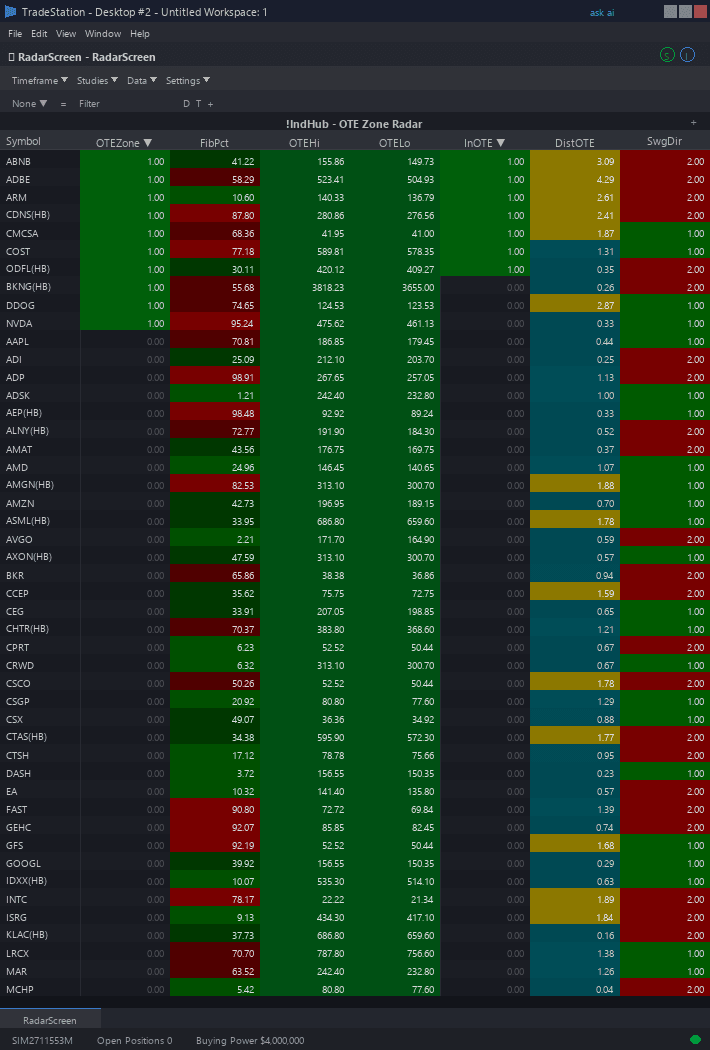
Example chart showing OTE Zone RadarScreen on a live trading session
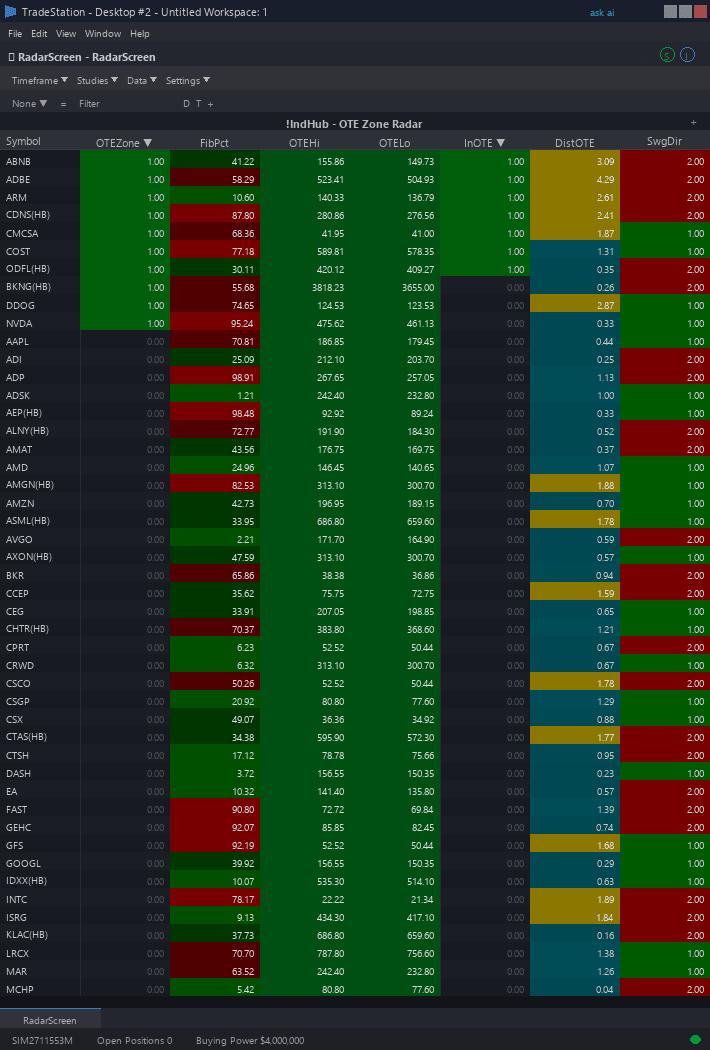
Example chart showing OTE Zone RadarScreen on a live trading session
Installation Guide
Step 1: Download the indicator file
After purchase, download ote-zone-radarscreen.eld from your confirmation email or account download page. Save it somewhere easy to find like your Desktop or Downloads folder.
Step 2: Open the Import Wizard
Open TradeStation. Click the File menu in the top-left corner, then select Import/Export EasyLanguage to launch the Import/Export Wizard.
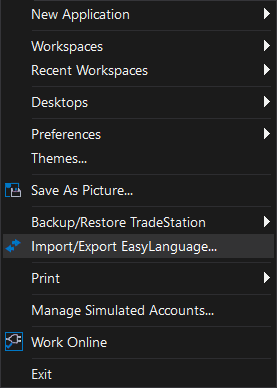
Step 3: Select the import type
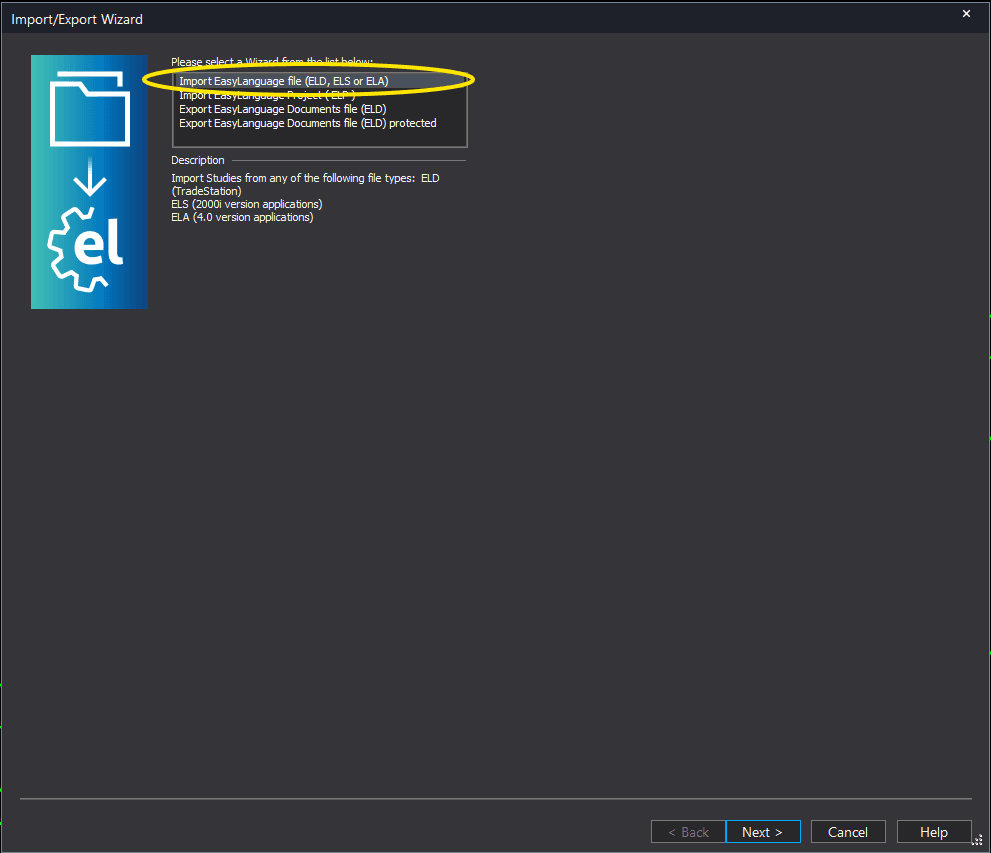
In the Import/Export Wizard, select "Import EasyLanguage file (ELD, ELS or ELA)" from the list. Click Next to continue.
Step 4: Browse for the file
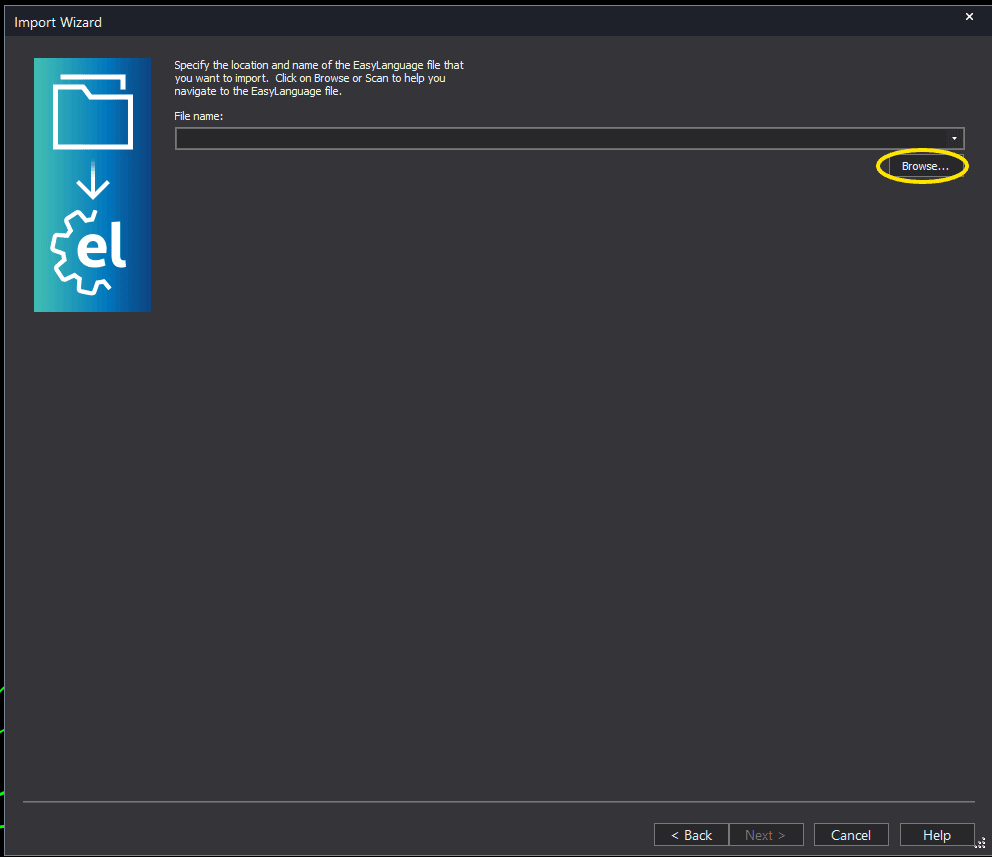
Click the Browse button to open a file browser where you can locate your downloaded .ELD file.
Step 5: Select and open the file
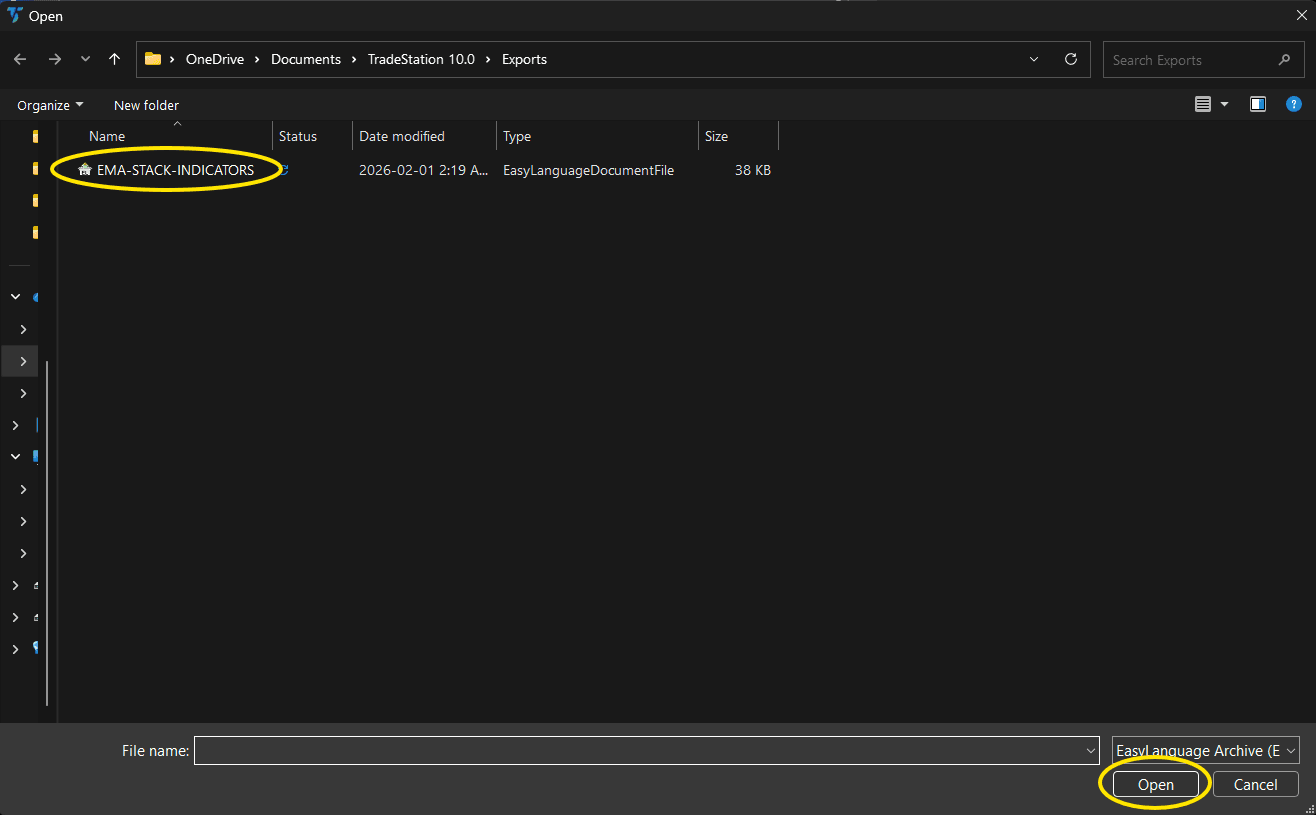
Navigate to the folder where you saved the .ELD file. Select ote-zone-radarscreen.eld and click Open. The file name shown may differ from the screenshot — look for your downloaded indicator file.
Step 6: Open the Studies menu
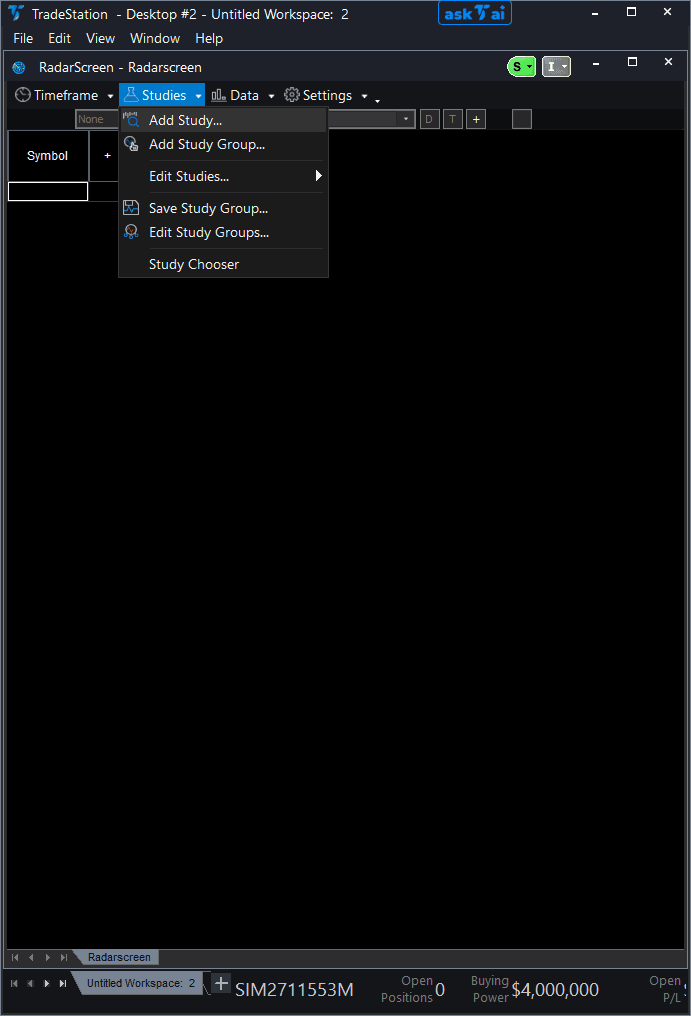
Open your RadarScreen window. Click the Studies dropdown in the toolbar and select Add Study.
Step 7: Select the indicator
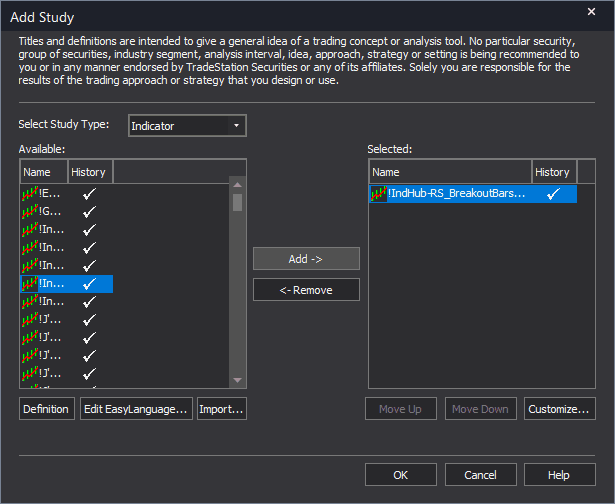
In the Add Study dialog, make sure Indicator is selected in the Study Type dropdown. Find "!IndHub-RS_OTE_v1" in the Available list, select it, and click Add. Click OK to apply.
Step 8: Configure your watchlist and columns
Add your symbols to the RadarScreen watchlist. Adjust column widths by dragging column borders. Key inputs: SwingStrength (default 5), FibUpper (default 0.62), FibLower (default 0.79), MinSwingATR (default 0.5), MaxOTEAge (default 100). Sort by InBullOTE or InBearOTE to find active setups.
Common Issues
All columns show zeros. No OTE zones are detected for any symbol.
OTE zones require confirmed market structure breaks followed by impulse swings of sufficient size (MinSwingATR). Ensure sufficient historical data is loaded in RadarScreen (500+ additional bars). Try reducing SwingStrength to 3 and MinSwingATR to 0.25 to detect smaller impulse swings. If still no zones appear, the market may be in a tight range without structural breaks — OTE zones are trend-dependent and will not appear during consolidation.
InBullOTE shows 1 but when I open the chart I do not see the OTE zone at the current price.
This is likely a timeframe mismatch. RadarScreen calculates on the interval set in the RadarScreen interval selector (bottom-right corner). If your RadarScreen is on 15-minute but your chart is on 5-minute, the OTE zones will differ because different timeframes produce different swing structures. Match the RadarScreen interval to your chart timeframe.
CEDist shows a negative value for some symbols. What does this mean?
A negative CEDist means price has already passed through the CE midpoint and is deeper into the OTE zone (between the CE and the 79% level). This is still a valid entry zone but you are deeper in the retracement. Positive CEDist means price has not yet reached the CE midpoint. The closer CEDist is to zero, the closer price is to the precision entry level.
For additional help, contact support.